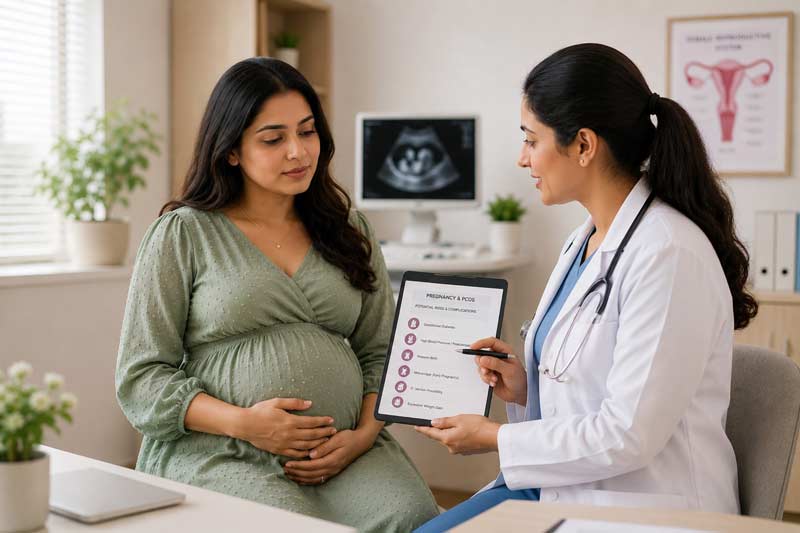
For many women with PCOS who become pregnant, new questions often follow.
Will PCOS affect the pregnancy? Will it increase the likelihood of complications? Will extra monitoring be needed?
These concerns are understandable.
PCOS can increase the likelihood of certain pregnancy-related complications. But this does not mean complications will definitely happen.
Many women with PCOS go on to have healthy pregnancies and healthy babies.
Understanding the possible risks simply allows for better monitoring and support throughout pregnancy.
PCOS During Pregnancy
Pregnancy changes hormone levels significantly, but some of the hormonal and metabolic patterns linked to PCOS may still continue in the background.
This is one reason why women with PCOS are often monitored more closely during pregnancy.
The goal is not to create fear. It is to recognise potential concerns early and manage them appropriately if they arise.
The Most Common Complications
Gestational Diabetes
Gestational diabetes is one of the more commonly discussed pregnancy concerns associated with PCOS.
Because many women with PCOS already experience some degree of insulin resistance, pregnancy can place additional demands on how the body regulates blood sugar.
This can increase the likelihood of elevated blood sugar levels during pregnancy.
Regular monitoring helps identify changes early. With appropriate care, nutrition support, and medical guidance where needed, many women manage gestational diabetes successfully during pregnancy.
Preeclampsia
Women with PCOS may also have a slightly higher likelihood of developing high blood pressure during pregnancy.
In some cases, this may lead to a condition called preeclampsia, which requires medical attention and monitoring.
Insulin resistance, inflammation, and metabolic factors are believed to contribute to this connection.
Routine prenatal appointments and blood pressure checks help healthcare providers monitor for early signs.
Miscarriage Risk
Some studies suggest that miscarriage may be more common in women with PCOS compared to those without the condition.
Hormonal imbalance, insulin resistance, and inflammation may all play a role.
Hearing this can understandably feel difficult.
At the same time, increased risk does not mean pregnancy loss is inevitable.
Many women with PCOS carry pregnancies successfully to full term.
And for women who do experience miscarriage, it is important to remember that it is not caused by something they did wrong.
Preterm Birth
Women with PCOS may also have a slightly increased likelihood of delivering earlier than expected.
This can sometimes happen alongside conditions such as gestational diabetes or high blood pressure during pregnancy.
At the same time, many women with PCOS deliver at full term without significant complications.
Why Monitoring Matters
Many of the complications associated with PCOS pregnancy are connected to the same systems involved in PCOS itself: insulin regulation, hormonal balance, and metabolism.
Pregnancy naturally increases the body’s metabolic demands.
When insulin resistance or hormonal imbalance is already present, closer monitoring and additional support may become important during pregnancy.
This does not mean complications are guaranteed. It simply explains why healthcare providers often pay closer attention to pregnancy in women with PCOS.
Women with PCOS often benefit from consistent prenatal care and regular monitoring throughout pregnancy.
This may include blood sugar monitoring, blood pressure checks, nutritional guidance, monitoring fetal growth and development, and conversations about sleep, stress, and overall wellbeing.
Balanced meals, regular movement, proper sleep, and stress management may all help support metabolic and hormonal balance over time.
Pregnancy With PCOS Can Still Be Healthy
Having PCOS may increase the likelihood of certain pregnancy complications, but it is only one part of the overall picture.
Many women with PCOS experience healthy pregnancies with the right care, monitoring, and support.
Understanding the condition helps make pregnancy feel more manageable and less uncertain.
And in many cases, that awareness allows women to approach pregnancy with more confidence, preparation, and reassurance.
Source:
American College of Obstetricians and Gynecologists (ACOG)